Plagiarism is one of the most important academic integrity issues faced by students, researchers, and PhD scholars. It occurs when someone uses another person’s words, ideas, research findings, images, or intellectual work without giving appropriate credit to the original source.
Understanding how to avoid plagiarism in assignments, projects, and research papers is essential for producing original, credible, and academically responsible work. At DST Arena, we encourage students and researchers to develop ethical research and academic writing practices that improve both the originality and quality of their work.
What Is Plagiarism in Academic Writing?
Plagiarism is the presentation of another person’s intellectual contribution as your own without proper acknowledgement. It may occur intentionally or unintentionally.
Common examples include copying text directly from websites, journals, books, or assignments without citation; using another author’s ideas without acknowledging the source; improperly paraphrasing content; or reusing previously submitted work without appropriate disclosure.
Even accidental plagiarism can create problems in academic work, which makes proper citation and referencing extremely important.
How to Avoid Plagiarism in Assignments, Projects, and Research Papers
Students and researchers can reduce plagiarism by following appropriate academic writing and referencing practices. One of the most effective methods is to understand the original source and explain its information in your own words rather than simply changing a few words.
Whenever you use another author’s idea, argument, theory, data, or research findings, provide an appropriate citation.
Use Proper Citation and Referencing
Proper citation is one of the most important ways to avoid plagiarism. Depending on your university, institution, journal, or conference requirements, you may need to follow referencing styles such as APA, MLA, Harvard, Chicago, or IEEE.
Make sure every source cited within the text is correctly included in the reference list.
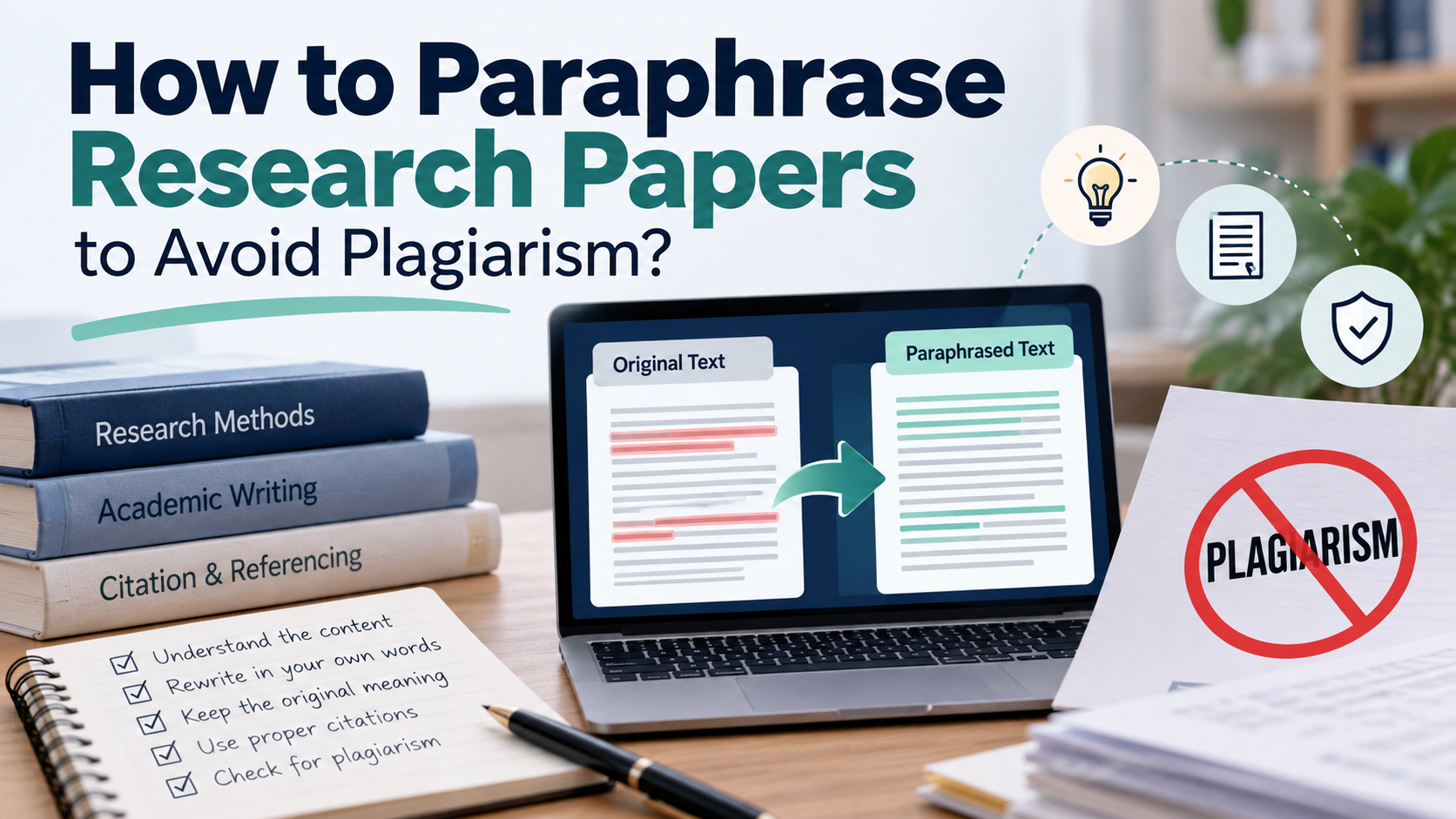
Paraphrase Information in Your Own Words
Effective paraphrasing means understanding the original information and explaining it using your own sentence structure and wording.
Simply replacing some words with synonyms is not sufficient. The original source should still be cited when the idea belongs to another author.
Use Direct Quotations Correctly
When using the exact words of an author, place the content within quotation marks and provide the required citation. Direct quotations should be used selectively because academic writing should primarily demonstrate your own understanding, interpretation, and analysis.
Maintain an Accurate Reference List
Record your sources while conducting research instead of trying to reconstruct them at the end.
Reference-management tools such as Zotero, Mendeley, and EndNote can help organize research sources and manage citations efficiently.
How to Avoid Plagiarism in Research Papers Through Original Analysis
A strong plagiarism-free research paper should go beyond rewriting existing literature. Researchers should compare previous studies, identify research gaps, analyze results, discuss limitations, and develop their own arguments.
For example, instead of merely describing previous research, explain how existing findings relate to your research problem and identify areas that require further investigation.
Original analysis strengthens the academic contribution of your research while reducing excessive dependence on existing sources.
Check Plagiarism Before Submitting Your Academic Work
Before submitting an assignment, project, dissertation, thesis, or research paper, carefully review all citations, quotations, references, figures, tables, and borrowed material.
Similarity-detection tools can help identify passages that may require revision or additional citation. However, a similarity percentage alone should not be treated as a definitive measure of plagiarism. Proper attribution and academic context are also important.
How DST Arena Supports Plagiarism-Free Academic Research
DST Arena (Design & Study of Technology Arena) supports students, researchers, and PhD scholars in developing stronger academic and research skills.
Guidance related to research methodology, literature review, academic writing, citation practices, research planning, and referencing can help researchers improve the quality and originality of their academic work.
The objective is to strengthen researchers’ own academic abilities while maintaining ethical research practices and academic integrity.
Conclusion – How to Avoid Plagiarism in Assignments, Projects, and Research Papers
Learning how to avoid plagiarism in assignments, projects, and research papers is essential for responsible academic writing. Proper citation, effective paraphrasing, accurate referencing, careful source management, and original analysis can significantly reduce the risk of plagiarism.
By following ethical academic practices and developing independent research skills, students and researchers can create credible and meaningful academic work. DST Arena encourages scholars to prioritize originality, proper attribution, and academic integrity throughout their research journey.
How to Paraphrase Research Papers to Avoid Plagiarism?


1 Comment
[…] https://dstarena.com/blog/how-to-avoid-plagiarism-in-assignments-projects-and-research-papers […]